

Why Chainrails?
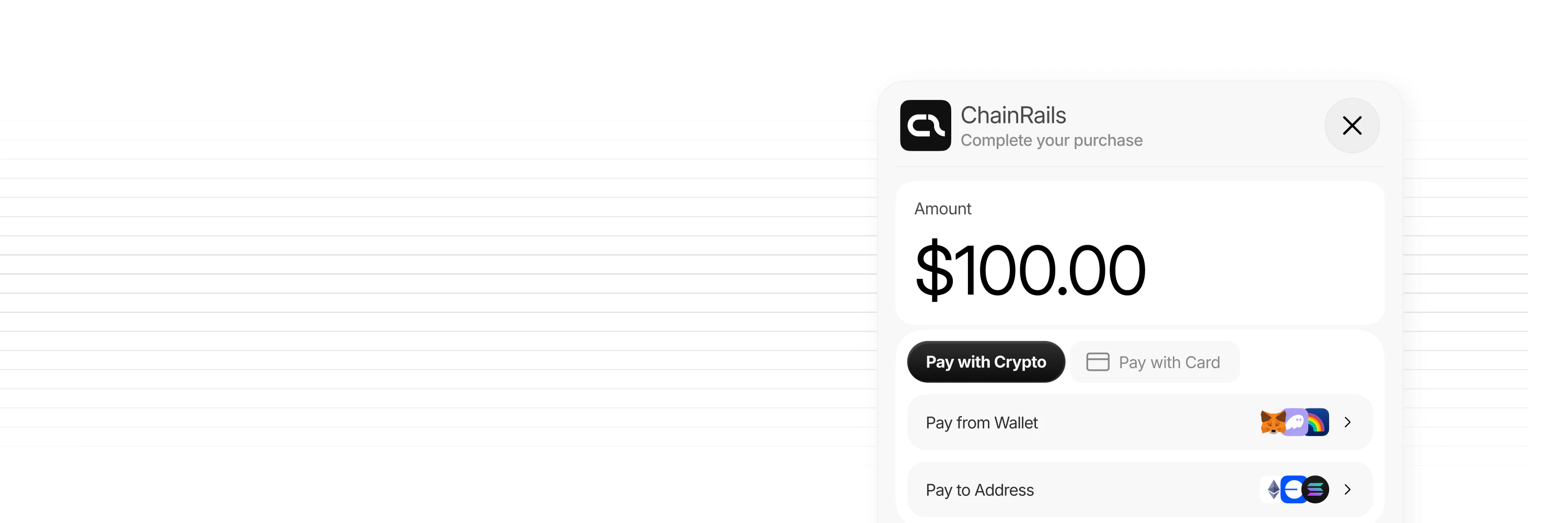
Multichain integration complexity
Building and maintaining integrations with multiple blockchains is complex, time-consuming and expensive. Each chain has its own unique architecture, token standards, and developer tools. While some products truly need multichain logic, most apps don’t — they just want to accept deposits/payments from users wherever those users already are without managing 10+ different infrastructures.Token and liquidity fragmentation
Every blockchain operates its own liquidity silos — a USDC on Ethereum isn’t the same as a USDC on Solana or Avalanche. Why do I have to keep track of USD-ABCDE.. on 15 different chains? Users are forced to juggle multiple wallets and tokens across chains, leading to poor user experiences and lost revenue for businesses. At the same time, modern Web3 applications increasingly serve users beyond the crypto-native ecosystem. Accepting fiat payments from these users can be a daunting task. It requires integrating with multiple payment processors, managing complex compliance requirements, and dealing with the inherent latency and fees of fiat transactions.The future we’re building
Chainrails eliminates this fragmentation and friction. Build on the chain you prefer — and accept deposits/payments from any chain, in any token, or fiat currency through a single SDK. No redeployments. No custom bridge logic. No juggling liquidity. Just one integration that connects your app to users everywhere.Get Started
Quickstart
Start accepting payments in 10 minutes.
Core Concepts
Understand how Chainrails works under the hood.
API Reference
Explore the Chainrails API.
SDK Reference
Explore the Chainrails SDKs.
Contract Reference
Integrate Chainrails directly with your smart contracts.
Supported Networks & Tokens
Find all supported blockchains and tokens.